
Why Self-Control Fails: The Real Science Behind Quitting

Authored by QSFS Team: Final Review by Aman Doda
Last Updated: 29/01/2026

- Why self-control alone is not enough to quit nicotine
- How the brain changes with repeated nicotine exposure
- Why cravings override logic and intention
- What happens inside the body when nicotine is removed
- Why relapse is a biological response, not a personal failure
- 01: How self-control normally works in the brain
- 02: What nicotine does to brain reward circuits
- 03: Why the brain resists quitting, even with strong intention
- 04: What happens when nicotine is suddenly removed
- 05: Why relapse is a biological response, not a character flaw
- 06: Educational Video: Why Willpower Alone Fails While Quitting
- 07: FAQs
- 08: Disclaimer
Many people believe that quitting smoking is just about willpower. If someone truly wants to quit, they should be able to stop. When quitting doesn’t work, the failure is often blamed on weak self-control.
But this idea does not reflect what actually happens inside the body. Many people who try to quit are motivated, informed, and genuinely determined—yet still find themselves smoking again.
This repeated struggle can feel confusing and discouraging. It makes people question themselves and wonder why quitting feels so hard, even when the desire to stop is real.
To understand this, we need to look beyond motivation and self-control. The answer lies in how the brain works—and how nicotine slowly changes the systems that control habits, urges, and decision-making.
How self-control normally works in the brain
Self-control mainly comes from the front part of the brain. This area helps us think ahead, pause before acting, and choose what’s better in the long run instead of giving in to quick urges.
When this system is working well, it can step in and say things like, “Not right now,” or “This isn’t good for me.” It works best when the brain is calm, rested, and not under heavy pressure.
Self-control is not endless. It weakens when a person is tired, stressed, hungry, or emotionally drained. That’s why resisting urges feels much harder during tough or exhausting moments.
It’s also important to understand that self-control is meant to handle normal, everyday urges. It is not built to constantly fight strong internal signals driven by chemicals.
This is where nicotine changes things. Nicotine strengthens and prioritizes urges in the brain, making them much louder and harder to ignore. When that happens, normal self-control often isn’t enough to overpower them.
What nicotine does to brain reward circuits
Nicotine acts directly on the brain’s reward system. This is the part of the brain that controls motivation, pleasure, and behaviors linked to survival, like eating or feeling safe.
When nicotine reaches the brain, it causes a strong release of dopamine. Dopamine is the chemical that signals relief and reward. The brain quickly links nicotine with feeling “okay” or back to normal.
With repeated nicotine use, the brain starts to adapt. It lowers its own natural dopamine production and begins depending on nicotine to keep dopamine levels steady. Without nicotine, dopamine drops below normal levels.
This creates an imbalance. The brain no longer sees nicotine as a choice. It starts treating it as something necessary to feel stable.
Because this reward system is stronger and more basic than the brain’s self-control system, it can overpower logic and intention. This is why quitting often feels like an internal fight rather than a simple decision.
Why the brain resists quitting, even with strong intention
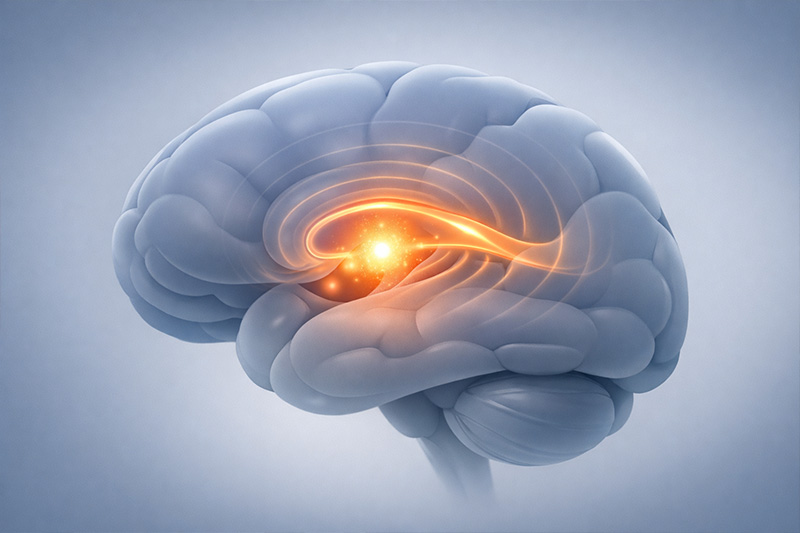
When someone decides to quit smoking, the thinking part of the brain is fully involved. The decision is real, and the reasons usually make sense. There is genuine intention to stop.
But the brain’s reward system has already adjusted to regular nicotine use. It now expects nicotine to keep things balanced. When nicotine suddenly disappears, the brain senses a problem.
This triggers stress signals inside the body. Chemicals are released that cause restlessness, discomfort, low mood, and an uneasy feeling. These sensations are not a lack of strength—they are physical alarm signals.
At the same time, this internal stress weakens self-control. It becomes much harder for the thinking brain to stay in charge when the body is sending urgent signals that something feels wrong.
This is why people can truly want to quit and still feel pulled back to smoking. The brain is not rejecting the goal. It is trying to restore balance using the only method it has learned so far.
When nicotine is removed, the brain is not operating in a calm or balanced state. Reward chemicals are low, stress signals are high, and the brain is under pressure to fix this imbalance as quickly as possible.
In this condition, going back to smoking is not a failure of willpower, morals, or discipline. It is the brain choosing the fastest solution it has learned to stop discomfort and restore stability.
Relapse often happens suddenly, even after strong determination and clear understanding of the harms. This is because the action is driven by deep survival and reward circuits, not just conscious decision-making.
The brain is not “giving up” on quitting. It is following pathways that were reinforced over time—pathways that previously brought relief. Until those pathways weaken and new balance is restored, relapse remains a predictable biological response.
Understanding this removes unnecessary guilt and self-blame. It explains why many people relapse multiple times—not because they lack character or self-control, but because their brain has been conditioned to rely on nicotine to feel normal.
Why repeated smoking exposure increases pregnancy risks
Smoking during pregnancy usually happens many times, not just once. This means the baby is repeatedly exposed to reduced blood flow and lower oxygen levels.
Each time smoking tightens blood vessels and reduces oxygen, the placenta and the baby receive less support. When this happens again and again, there is not enough time for the body to fully recover between exposures.
Over time, this constant reduction puts extra stress on the developing baby. Growth may stay slower, and the baby has less room for healthy development.
Pregnancy follows very specific stages of growth. When these stages are disturbed repeatedly, the risk of problems increases.
This explains why smoking during pregnancy raises health risks. The harm does not come from one moment, but from continuous interference with blood flow, oxygen, and nutrient supply throughout pregnancy.
This explanation helps clarify why quitting smoking often fails even when motivation is strong and intentions are clear. The struggle is not due to weak self-control—it comes from how the brain adapts to nicotine over time.
Nicotine reshapes the brain’s reward system so deeply that the brain begins to rely on it to feel stable and “normal.” When nicotine is suddenly removed, the brain enters a stressed, unbalanced state and sends strong signals to restore relief.
This explains why cravings feel urgent, why logical thinking feels distant in those moments, and why relapse can happen quickly despite firm decisions. The brain is reacting to chemical imbalance, not lack of effort or commitment.
Most importantly, this shows that quitting smoking is not a test of character. It is a biological recovery process that involves brain adaptation, stress signaling, and time. Understanding this makes the struggle more realistic—and more compassionate toward oneself.
FAQs
Self-control comes from the thinking part of the brain, which gets overwhelmed when nicotine withdrawal creates stress and chemical imbalance. As discomfort rises, self-control loses strength.
No. Relapse happens because the brain has adapted to nicotine and reacts strongly when it is removed. This is a biological response, not a personal weakness.
Cravings are signals from the brain’s reward system trying to restore balance. They are driven by chemistry, not by conscious desire or choice.
As nicotine leaves the body, the brain’s reward system is still adjusting. Dopamine levels remain low and stress signals stay active, which makes urges stronger over time rather than weaker at first.
Motivation helps start the quit attempt, but addiction works at a chemical level. Without addressing how the brain adapts to nicotine, motivation alone often gets overridden by withdrawal signals.
Knowledge comes from the thinking brain, while cravings come from deeper survival circuits. During withdrawal, those circuits temporarily dominate decision-making.
Stress, fatigue, and emotional load weaken the thinking part of the brain. At the same time, nicotine-conditioned reward circuits become more active, making urges feel stronger.
Yes. As the brain slowly restores its natural dopamine balance and stress signals reduce, self-control becomes stronger and more reliable again.
If withdrawal symptoms feel overwhelming, persistent, or interfere with daily functioning, please speak to a doctor.
QSFS / Masterclass
Some people understand why quitting feels so difficult only after they see how nicotine changes the brain, not just habits. The Quit Smoking & Nicotine Freedom System (QSFS) explains how nicotine affects reward circuits, stress signals, and self-control in a structured, step-by-step way.
This is an educational framework focused on understanding the biology behind quitting struggles—why cravings override intention and why relapse happens even with strong motivation.
It does not offer medical treatment, shortcuts, or promises. It is designed to help people clearly understand what is happening inside the brain during nicotine dependence and withdrawal.
Summary
Self-control fails during quitting not because a person is weak, but because nicotine changes how the brain functions. Repeated nicotine use reshapes the brain’s reward system, making it depend on nicotine to feel balanced.
When nicotine is removed, dopamine levels drop and stress signals rise. In this unstable state, the brain pushes strongly for relief, and cravings can overpower logic and intention.
This explains why quitting often feels confusing and discouraging even with strong willpower. The struggle comes from biology, not lack of effort or motivation.
Understanding this removes blame and guilt. Quitting is not a test of character—it is a process of allowing the brain to recover from nicotine-driven changes over time.
References
- World Health Organization (WHO) – Tobacco and addiction
https://www.who.int/health-topics/tobacco - National Institute on Drug Abuse (NIDA) – Nicotine addiction
https://nida.nih.gov/research-topics/nicotine
Disclaimer
This article is shared for educational and informational purposes only. Its intent is to help readers understand how nicotine, smoking, and chewing tobacco can affect the body through known biological processes.
The content here is not a substitute for professional medical advice, diagnosis, or treatment. Health conditions can vary from person to person, and medical decisions should always be made based on individual evaluation.
If you are experiencing symptoms such as chest pain, persistent high blood pressure, palpitations, fainting, breathing difficulty, or any other concerning health issue, it is important to seek medical attention from a qualified healthcare professional.
The Quit Smoking & Nicotine Freedom System (QSFS) is a behavioral and educational support system, not a medical treatment. It does not diagnose, treat, or replace medical care. QSFS is designed to help individuals understand nicotine dependence, habit patterns, and behavioral change in a structured, non-medical way.
Readers are encouraged to use this information as a tool for understanding, not as a basis for self-diagnosis or medical decision-making.
Share via: