
How Smoking Is Silently Destroying Your Heart — And Why Quitting Changes Everything
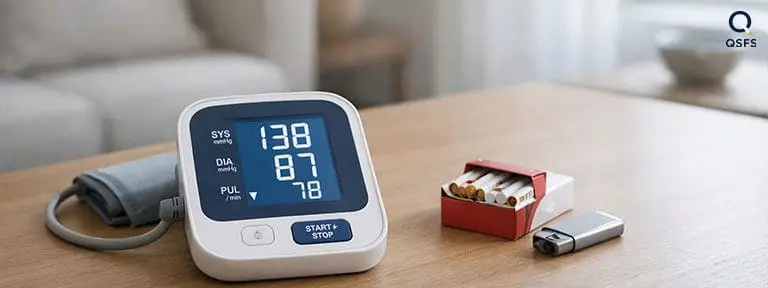
If you're a smoker, you've probably heard the warnings. The labels on the pack, the public service announcements, the concerned looks from people around you. But knowing smoking is "bad for you" and truly understanding what it's doing to your heart — right now, with every cigarette — are two very different things.
This isn't meant to scare you. It's meant to give you the information you deserve: a clear, honest picture of how smoking affects the heart, and the science-backed truth about what changes the moment you decide to quit.
What Happens the Moment You Light Up
Within seconds of inhaling cigarette smoke, your body goes into a kind of emergency mode. Your heart rate climbs. Your blood pressure spikes. The carbon monoxide from the smoke enters your bloodstream and begins displacing oxygen from your red blood cells — meaning your heart has to work harder just to deliver the same amount of oxygen to your organs.
This happens every single time you smoke. Not occasionally. Not if you smoke a lot. Every. Single. Time.
Now multiply that by 10, 15, or 20 cigarettes a day, and you begin to understand why smoking is the leading preventable cause of cardiovascular disease in the world.
The Slow, Steady Damage: How Smoking Affects the Heart Over Time
1. It Attacks Your Arteries From the Inside
Your arteries are lined with a delicate layer of cells called the endothelium. In a healthy non-smoker, this lining is smooth and flexible, allowing blood to flow freely. In a smoker, the thousands of toxic chemicals in cigarette smoke — including nicotine, carbon monoxide, and acrolein — cause chronic inflammation of this lining.
Over time, this inflammation triggers the buildup of fatty plaques inside the artery walls, a condition called atherosclerosis. These plaques narrow the arteries and make them stiff and less able to expand when your heart needs more blood — like when you exercise, or feel stressed.
The result? Your heart is perpetually working under pressure, pumping blood through narrower, stiffer pipes than it was ever designed to handle.
2. It Makes Your Blood More Likely to Clot
Smoking doesn't just damage your artery walls — it also makes your blood "stickier." Cigarette chemicals increase the stickiness of platelets (the cells responsible for clotting) and raise levels of fibrinogen, a protein that helps form clots. This is your body's clotting system being thrown dangerously out of balance.
When a plaque inside a narrowed artery ruptures — which can happen suddenly and without warning — this hyper-clotting blood is right there, ready to form a blockage. The result is a heart attack.
Smoking roughly doubles your risk of having a heart attack compared to non-smokers. For heavy smokers, that risk is even higher.
3. It Disrupts Your Heart's Rhythm
Beyond blockages, smoking also affects the electrical system of your heart. Nicotine stimulates the release of adrenaline, which can trigger irregular heartbeats — a condition called arrhythmia. Smokers have a significantly higher risk of developing atrial fibrillation (AFib), a serious rhythm disorder where the upper chambers of the heart quiver instead of beating properly.
AFib itself dramatically increases the risk of stroke, since blood can pool and clot in the heart and then travel to the brain.
4. It Weakens the Heart Muscle Itself
Long-term smoking is associated with a condition called cardiomyopathy — a weakening and enlarging of the heart muscle. When your heart is constantly starved of oxygen (thanks to carbon monoxide binding to haemoglobin) and forced to pump harder through narrowed arteries, it eventually starts to strain and enlarge. A bigger, weaker heart is a less efficient pump.
This can lead to heart failure — a chronic, debilitating condition where the heart can no longer pump enough blood to meet the body's needs.
What the Numbers Tell Us
The science on how smoking affects the heart is overwhelming, and the numbers paint a stark picture:
- Smokers are 2–4 times more likely to develop coronary heart disease than non-smokers.
- Smoking accounts for approximately 1 in 4 deaths from cardiovascular disease in high-income countries.
- The risk is dose-dependent: the more you smoke, and the longer you've smoked, the greater your risk.
- Even light or occasional smoking — just 1–4 cigarettes per day — has been shown to significantly increase the risk of heart disease and death from cardiac events.
- Women who smoke and also use hormonal contraceptives face a dramatically elevated risk of heart attack and stroke — the combination is particularly dangerous.
- Smokers who have already had a heart attack are more likely to have a second one and to die from it.
According to the World Health Organization, tobacco kills over 8 million people each year — and cardiovascular disease is one of the leading causes among those deaths.
For a deeper look at the clinical research, the American Heart Association's overview on smoking and heart disease provides a thorough breakdown of the evidence.
These aren't distant statistics. They represent real consequences that are accumulating in your body with every cigarette.
The Truth About "Low-Tar" and "Light" Cigarettes
Many smokers switch to "light" or "low-tar" cigarettes believing they're making a safer choice. The research is clear: they are not significantly safer for your heart.
Smokers of "light" cigarettes tend to inhale more deeply and smoke more cigarettes to maintain their nicotine levels — a behaviour called "compensatory smoking." The cardiovascular risk remains essentially the same.
There is no safe cigarette.
Here's the Part That Matters Most: What Quitting Does
If the damage described above sounds irreversible, it isn't — at least not entirely. And this is the most important message in this entire article.
Your body begins repairing itself almost immediately after you quit.
Here's what the science shows about what happens when you stop smoking:
- Soon: Your heart rate and blood pressure begin to drop toward normal levels.
- In the first hours: Carbon monoxide levels in your blood fall significantly, and your blood's oxygen-carrying capacity begins to recover.
- In the first weeks: Blood circulation improves. Your heart no longer has to work as hard with every beat.
- Within the first year:
- Over the years that follow: Your risk of stroke falls to roughly the same level as a non-smoker.
- Over the years that follow:
The body's capacity for recovery is remarkable. The heart — despite everything it has been through — begins to heal.
"But I've Smoked for Years. Is It Too Late?"
This is one of the most common questions smokers ask, and it's worth answering directly: No. It is never too late to benefit from quitting.
Research consistently shows that quitting at any age reduces the risk of heart disease. People who quit in their 40s gain back most of the life expectancy they would have lost to smoking. Even those who quit in their 60s see measurable improvements in cardiovascular health.
Every cigarette you don't smoke is a cigarette that isn't damaging your arteries, isn't spiking your blood pressure, isn't making your blood stickier. The reduction in risk begins with the very first day you quit.
Hear It From Someone Who's Been There — Vishal's Story
Sometimes statistics don't move us. But a real person's voice does.
Vishal was a smoker who felt stuck — not because he didn't want to quit, but because willpower alone never seemed to be enough. Watch his story and hear in his own words what finally made the difference.
The Missing Piece: Why Willpower Alone Isn't Enough
Most quit attempts fail — not because the person wasn't trying hard enough, but because they were fighting the wrong battle.
Nicotine patches, gums, and medications address the physical side of addiction. But smoking isn't just a physical habit. For most people, it's deeply tied to emotions, stress responses, boredom, and unconscious patterns built up over years. That invisible layer — the mental dependence — is the part that almost never gets treated.
And it's exactly why most people relapse, even after weeks or months of being smoke-free. The body heals. But the mind keeps pulling them back.
Until the mental root is addressed, the urge to smoke will always find a way to return.
Frequently Asked Questions
How does smoking affect the heart specifically?
Smoking damages the heart in four key ways: it inflames and narrows the arteries (atherosclerosis), makes the blood stickier and more prone to clotting, disrupts the heart’s electrical rhythm (increasing the risk of AFib), and weakens the heart muscle over time. Each of these effects compounds the others — together they dramatically raise the risk of heart attack, stroke, and heart failure.
How quickly does smoking damage the heart?
Damage begins immediately. Within seconds of smoking a cigarette, heart rate and blood pressure spike and carbon monoxide begins reducing the blood’s ability to carry oxygen. Over months and years, this repeated stress leads to cumulative structural damage — narrowed arteries, thickened blood, and a strained heart muscle.
Can your heart recover after quitting smoking?
Yes — and the recovery begins faster than most people expect. Soon, heart rate starts to normalise. The heart is remarkably resilient when given the chance to heal.
How long does it take for the heart to heal after quitting smoking?
The timeline varies depending on how long and how heavily a person smoked, but meaningful recovery happens at every stage: blood pressure and circulation improve within weeks, heart attack risk halves within a year, and stroke risk normalises within five years.
Is smoking a few cigarettes a day still harmful to the heart?
Yes. Research consistently shows that even 1–4 cigarettes per day significantly increases the risk of heart disease and cardiac death. There is no “safe” level of cigarette smoking for the heart. Light or social smokers face real cardiovascular risk — not just heavy daily smokers.
Why do smokers relapse even when they want to quit?
Because most quit methods only address the physical addiction — the nicotine cravings. What they miss is the mental dependence: the emotional triggers, stress patterns, and habitual associations that have been wired into the brain over years. When those aren’t addressed, the urge to smoke returns even after the physical withdrawal is over. This is why approaches that work on the psychological root cause — like the QSFS program — produce more lasting results.
What is the QSFS program and how is it different from other quit smoking methods?
QSFS (Quit Smoking & Nicotine Freedom System) is a 3-week live program that addresses the mental and psychological root cause of smoking addiction — not just the physical cravings. Unlike patches, gums, or medication, QSFS works on the internal patterns, emotional triggers, and mental dependence that keep people stuck. It’s a structured, guided experience designed for people who have tried to quit before and want a permanent solution.
Who is the QSFS program suitable for?
QSFS is designed for any smoker who is ready to quit for good — whether they’ve tried before or are attempting it for the first time. It’s particularly effective for people who feel their smoking is tied to stress, emotions, or deeply ingrained habits, and for those who’ve found that willpower or nicotine replacement alone wasn’t enough to make the change stick.
A Final Word
Your heart has been working hard to keep you going — quietly, persistently, despite everything it's been put through. It is more resilient than you know. And so are you.
Quitting smoking is one of the most powerful decisions you can make — for your health, your energy, your relationships, and your future. You don't have to do it alone, and you don't have to do it on willpower alone.
Your heart is ready to recover. Give it the chance.
If you take medicines for blood pressure or your heart, please keep taking them and following your doctor's advice while you quit.