
How Your Lungs Heal After You Quit Smoking: A Science-Based Timeline

Authored by the QSFS Team | Final Review by Aman Doda
Last Updated: 09/12/2025
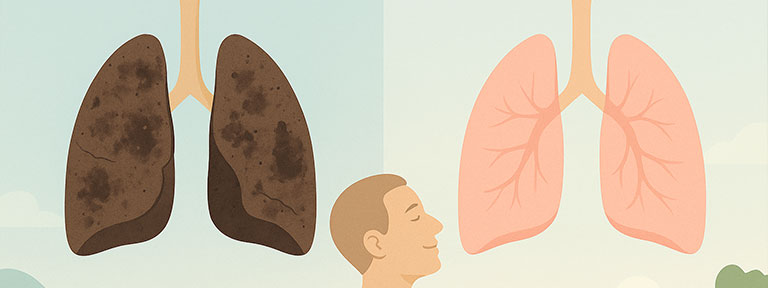
- Why coughing may increase after quitting — and why that’s a good sign
- The real timeline of lung healing (day-by-day, week-by-week, month-by-month)
- How your lungs clean themselves even after years of smoking
- What medical scans can’t show — but your body still repairs
- Why breathlessness doesn’t always improve immediately
- What happens to your lung cilia, alveoli, and oxygen absorption
- How Joyraj’s story shows recovery even with COPD
- What to realistically expect in your first 12 months after quitting
- 01: Introduction: Why Lung Recovery Is Misunderstood
- 02: The Timeline: What Happens in Your Lungs After Quitting
- 03: The Science of Lung Cleaning & Regeneration
- 04: Real Story: Joyraj’s COPD Recovery Experience
- 05: Emotional Recovery: Dealing with Breathlessness & Doubt
- 06: The Role of Movement in Lung Repair
- 07: Reframing Lung Healing: What Progress Actually Feels Like
- 08: FAQs
- 09: Conclusion
- 10: Disclaimer
Why Most People Misunderstand Lung Healing
Let’s start with something important:
Most people assume that if their breathing doesn’t improve quickly after quitting, it means the damage is permanent.
This is one of the biggest emotional blocks we see in long-term smokers or those with breathlessness:
“I quit, but I still get breathless… so what’s the point?”
But here’s the clarity most people never receive:
Healing is happening — even if you can’t feel it yet.
Think about this…
If someone goes to the gym after years of sitting, they don’t instantly feel stronger on Day 1.
They actually feel more sore, more tired, and more out of shape in the beginning.
But nobody tells them:
“See? You’re not getting better. This is pointless.”
We understand that healing requires time — and sometimes, the early signs of healing can feel uncomfortable.
Lung recovery works in a similar way.
But because it’s internal, invisible, and not instantly rewarding, we often misinterpret it.
The “It’s Too Late for Me” Myth
Many people — especially those over 40 or with long smoking histories — quietly carry this belief:
“My lungs must be too far gone. I’ve smoked for 20 years. It can’t reverse now.”
But here’s what science shows:
✔ The lungs start healing within hours of quitting
✔ Damaged lung tissue can regenerate — even in older adults
✔ Breathlessness is often caused by inflammation, not just irreversible scarring
✔ And even in chronic smokers, the rate of lung decline slows drastically after quitting
Yet because the average person doesn’t feel this happening, they give up hope too early.
Let’s be honest — most of us were never taught how the lungs actually repair.
So when you quit, and you still wake up breathless…
Or you cough more in the first few weeks…
Or walking still feels hard…
You assume the quit is “not working.”
But it is.
The body just speaks a different language.
And healing often hides behind discomfort.
Why the Internet Makes It Worse
Google is full of over-simplified timelines:
“Lung function improves by 30% in 2 weeks.”
“Cilia regrow in 1 month.”
“Lungs completely clean in 1 year.”
While those numbers are based on research, they often miss the emotional experience.
Healing is not just biological.
It’s psychological.
When you’re not told why your breathing still feels heavy in month 2…
Or why you’re coughing more now than when you smoked…
You start questioning your decision.
That’s why we’re doing this differently.
We’re not just giving you a list of benefits.
We’re showing you the invisible story inside your lungs.
So you can say:
“Ah… now I get it. This breathlessness doesn’t mean I’m stuck. It’s part of the process.”
Because when you understand that, you stop fearing the symptoms.
And start trusting the healing.
The Invisible Cleaning Crew Inside Your Lungs
Your lungs are not passive bags of air.
They’re living, self-cleaning, responsive organs — built to survive.
And even after years of smoking, they try to repair themselves the moment you stop.
But to understand this, let’s first break down how smoking damages them in the first place.
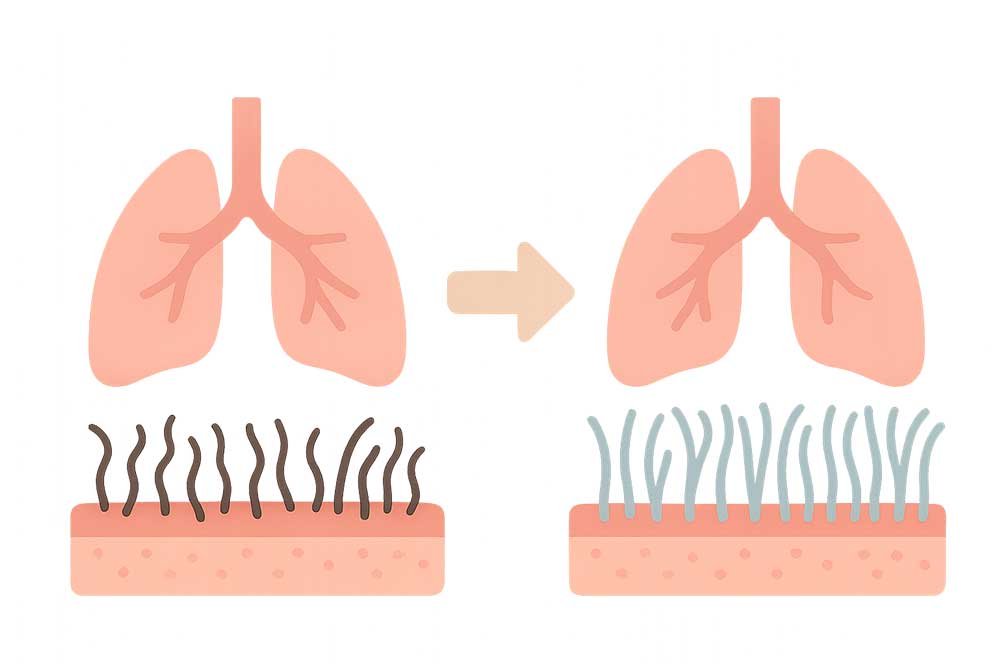
Step 1: Meet Your Lung’s Cleaning System
Inside your lungs are tiny hair-like structures called cilia.
Imagine millions of microscopic brooms — sweeping dust, mucus, and toxins upward and out.
They’re your lungs’ janitors.
But when you smoke, those cilia get paralysed.
They slow down. Then eventually get destroyed.
It’s like firing your entire cleaning crew.
So instead of clearing out mucus and toxins, your lungs start storing them.
This leads to that heavy chest feeling. That deep morning cough. That sticky breathlessness.
Now here’s the hopeful part.
Step 2: What Happens When You Quit
The moment you stop smoking, the toxic smoke stops suffocating your cleaning crew.
Within 24–48 hours, the cilia begin waking up.
Not fully — but enough to start twitching and sweeping again.
You may notice you’re coughing more.
This scares many people. But here’s what’s really happening:
👉 The lungs are finally pushing out what they were storing for years.
It’s like cleaning a house after a decade — the dust comes out before it clears.
This is why that “quit cough” is a good thing.
Step 3: Oxygen Starts Flowing Better
Inside your lungs are tiny air sacs called alveoli.
This is where oxygen from your breath enters your bloodstream.
Smoking inflames these sacs. Some may collapse.
But when you quit, inflammation starts to reduce.
Over weeks and months, more alveoli reopen.
Which means more oxygen reaches your body.
That’s why small things like:
- Climbing stairs
- Going for a walk
- Laughing hard
… start to feel easier — gradually.
Step 4: The Regeneration Timeline (Simplified)
Let’s walk through it simply:
- 20 minutes after quitting: Heart rate drops to normal
- 8 hours: Oxygen levels begin to stabilise
- 48–72 hours: Damaged nerve endings begin to heal; sense of smell improves
- 1–4 weeks: Cilia start functioning better; coughing may increase
- 1–3 months: Lung function improves measurably
- 9–12 months: Coughing and breathlessness reduce significantly
- 1–5 years: Lung capacity gradually improves; risk of respiratory illness declines
But here’s what matters more than numbers:
- These timelines vary based on your body, your history, and how long you smoked.
- Even partial healing makes a huge difference in quality of life.
- And most importantly: It’s never “too late.”
Think of It Like This…
Imagine a polluted river.
You stop dumping toxins in — that’s quitting smoking.
But the river doesn’t turn crystal clear the next day.
It slowly cleans itself. Bit by bit. Flow by flow.
The same goes for your lungs.
Even if you smoked for 20 years…
Even if you have mild COPD…
Your body still tries to clean house.
Not perfectly.
Not overnight.
But constantly.
That’s the quiet miracle happening inside you.
“I Quit Smoking… But I Still Feel Breathless”
Let’s talk about one of the most confusing parts of this journey.
You finally quit.
You expect your lungs to start feeling lighter.
You expect breathing to get easier.
But instead… it still feels heavy.
You wake up coughing.
You walk a few steps and feel winded.
You still get breathless doing things that didn’t feel this hard before.
And quietly, a thought shows up:
“What if I waited too long? What if this breathlessness means the damage is done?”
This happens to more people than you think.
And what they’re not told — what you may not have been told — is this:
These symptoms don’t mean you’re stuck.
They don’t mean quitting “didn’t work.”
They’re part of the adjustment phase your body goes through.
Let’s break it down calmly.
Why It Feels Worse Before It Feels Better
When you smoke, nicotine acts like a numbing agent.
It relaxes the airway muscles temporarily.
It dulls your natural cough reflex.
It gives you a “lift” that masks how tired your lungs actually feel.
So when you quit?
You’re no longer numbing the system.
You’re meeting your real breath.
Your real lung condition.
Your real energy levels — without the boost, without the mask.
And that can be confronting.
Here’s What Most People Don’t Realise
Coughing more after quitting is normal.
Feeling more mucus is normal.
Experiencing breathlessness is common.
It’s not because the damage is getting worse.
It’s because:
- Your lung cilia are waking up and trying to clean house
- Mucus that was stuck for years is now loosening
- Your body is recalibrating how to breathe — without nicotine support
This is the phase where a lot of people panic.
They think:
“Nothing is improving. What’s the point?”
But that’s the misunderstanding.
Healing isn’t always a “feel-good” process.
Sometimes it’s messy.
Sometimes it feels like a setback.
But underneath that discomfort — recovery is happening.
We Hear This All the Time
People tell us:
- “I’m coughing more now than I was while smoking.”
- “I feel just as breathless as before.”
- “I thought I’d have more stamina by now.”
And every time, we explain:
This is your body adjusting.
This is the discomfort of detox, not the decline of disease.
Because remember — when you quit, your lungs are trying to reboot.
That doesn’t happen quietly.
It happens with a bit of chaos.
A bit of confusion.
And sometimes, some uncomfortable symptoms.
But those symptoms don’t mean failure.
They’re just signs that your system is rebalancing.
The Psychological Layer
There’s also something else happening here.
For many people, smoking wasn’t just about nicotine.
It was a pause. A coping tool. A moment of calm during stress.
So when you remove that — and your breathing doesn’t immediately improve — it feels like a double loss.
“I gave up my comfort… and I still feel tired?”
It’s a very human response.
But if you can hold onto this understanding:
“My body is learning to function without a crutch.
My lungs are learning to breathe on their own again.
This doesn’t feel nice, but it is healing.”
…you’ll stop misreading the symptoms.
You’ll stop assuming the worst.
You’ll start recognising what’s really happening.
Joyraj Understood This
Joyraj had COPD symptoms.
He had years of breathlessness, mucus, and fatigue.
Even after quitting, his lungs didn’t feel “clean” immediately.
He still had rough mornings. Still had shortness of breath.
But instead of panicking, he understood the process.
He saw that breathlessness wasn’t proof that nothing was working — it was his body resetting.
That emotional clarity helped him stay the course.
And over time, real improvement came.
If You’re Feeling Doubt Right Now
If you’re in that phase where you’ve quit but don’t feel better…
If your breath still feels shallow…
If your cough sounds worse than before…
Let’s just say this plainly:
This is not failure.
This is your body rebalancing itself.
It’s okay to feel unsure.
It’s okay to feel tired.
But what’s not okay — is thinking you’re beyond repair.
Because you’re not.
And even if it doesn’t feel like it yet…
Your lungs are trying.
And that effort counts.
Let’s simplify something that confuses almost everyone in the early stages of lung healing:
“If I don’t feel any improvement… does that mean I’m not healing?”
Answer:
Not at all.
Lung recovery is one of the most quiet processes in the body.
It doesn’t create big “aha” moments every week.
It doesn’t come with obvious signs like a scab falling off or pain disappearing.
In fact, most of the progress your lungs make is so gradual… you don’t notice it until much later.
Here’s a more helpful way to look at it:
If you’re not getting worse…
If your breath isn’t declining…
If your cough isn’t intensifying…
That itself is progress.
Because before you quit, things were declining — even if you didn’t feel it every day.
But now?
That downward slide has paused.
Your lungs have stopped being attacked daily.
And your body is trying — quietly, invisibly, slowly — to clean up.
That’s healing. Even if it feels like “nothing.”
So here’s the shift:
“No dramatic change doesn’t mean no healing.
It means quiet repair is happening underneath.”
This mindset calms the need for constant reassurance.
It helps you stay steady.
And over time, that steadiness adds up to something real.
For visual clarity, here’s a simple explanation:
Why Movement Matters More Than You Think During Lung Healing
Here’s something most people don’t realise:
Your lungs don’t heal just by waiting.
They heal better when you move.
That doesn’t mean you need to go jogging or hit the gym.
In fact, even short, gentle movement — like a walk in the morning — makes a real difference.
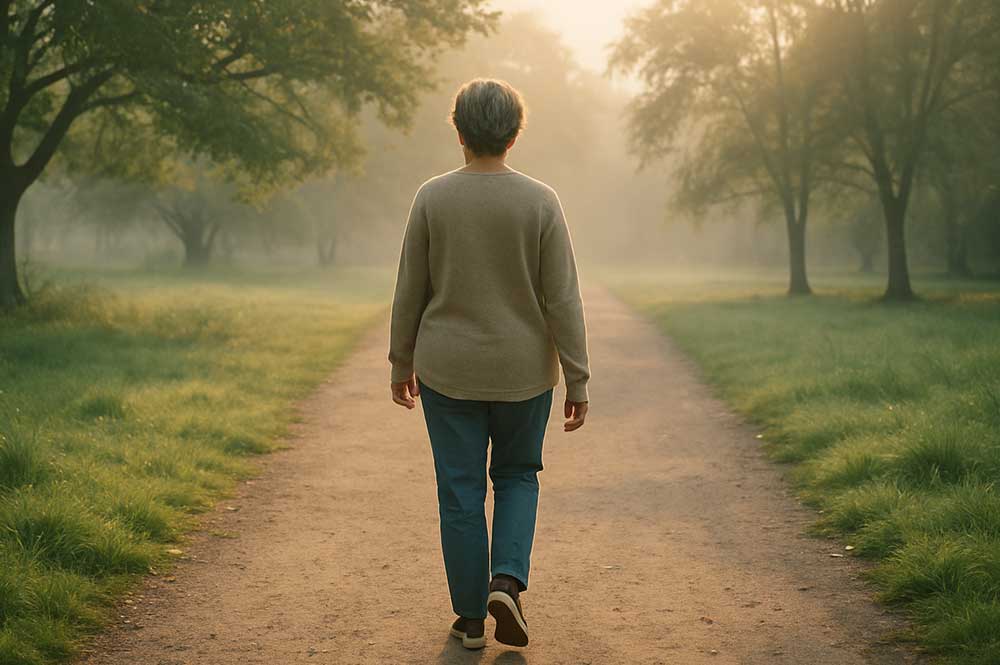
Why?
Because movement does something powerful inside the body:
- It increases blood flow
- It helps oxygen move more efficiently
- It activates the muscles around your lungs
- And it helps loosen mucus so it can be cleared
When you sit still for long periods (especially right after quitting), mucus tends to stay stuck.
Your lungs stay more inflamed.
You feel more sluggish.
But when you move — even lightly — your body helps the lungs do their job.
Here’s a simple way to look at it:
Smoking made your lungs sluggish.
Quitting gave them a chance to recover.
Movement helps them finish the job.
That’s not pressure.
That’s partnership.
You don’t need a fitness routine.
You just need to move a little more than before.
Let your lungs know you’re working with them.
That alone can accelerate the healing.
FAQs
It depends on how long you smoked, your age, and your health — but most people see real improvement in lung function within 3 to 12 months. Some healing continues for years.
Yes. Coughing often increases in the first few weeks as your lungs start clearing out mucus and toxins. It’s a sign of repair, not damage.
Yes — to a certain extent. While not all damage is reversible, quitting slows down further decline and allows partial healing. Many long-time smokers see major improvements.
Gentle movement, staying hydrated, breathing clean air, and avoiding secondhand smoke all support healing. But the biggest factor is simply staying smoke-free.
This can happen as your body adjusts. It may be due to inflammation shifting, mucus clearing, or even changes in breathing rhythm. It usually settles within a few weeks.
Not necessarily. Most people’s lungs recover naturally with rest, time, and movement. If you have a medical condition like COPD, your doctor may recommend specific support.
Yes — but gradually. Many people start feeling stronger within a few months, especially if they add light physical activity to support their recovery.
Conclusion: It’s Okay If You Don’t Feel It Yet
Let’s just say this honestly.
Healing doesn’t always feel like healing.
Some days you’ll wonder if anything’s actually improving.
Some mornings, the cough will still be there.
Some steps will still feel heavy.
And it’s easy to think:
“Maybe this is as good as it gets.”
But if you’ve quit, or even just thinking about quitting — please hear this:
Your lungs are trying.
Even when you can’t feel it.
Even when nothing dramatic is happening.
Even when you feel stuck.
Just because you don’t feel a big change… doesn’t mean change isn’t happening.
Lung healing is slow, quiet, and mostly invisible in the beginning.
But it’s real.
And it’s happening in the background — every hour you stay smoke-free.
You don’t have to do anything fancy.
You don’t have to be perfect.
You just have to stay patient.
And let your body catch up with your decision.
You’ve already done the hardest part — stopping the damage.
Now give your lungs the space to respond.
They will.
Watch This : Understanding the root casue of smoking
Watch the free QSFS Masterclass — calm, clear, and zero pressure:
If you’re ready to stop hiding—and finally quit in a way that feels freeing, not punishing—
Join our FREE Masterclass.
You’ll get clarity, real tools, and guidance on how QSFS can help you quit permanently.
Disclaimer
This article is for education and awareness only. It is not a substitute for professional medical advice, diagnosis, or treatment. If you have health concerns related to smoking, Gutka, or nicotine use, please consult a qualified healthcare provider. QSFS is a behavioural change system created by a certified quit-smoking specialist and has helped thousands of individuals quit mindfully. Results vary from person to person.
Share via: