
How Smoking Affects Blood Pressure

Authored by QSFS Team ; Final Review by Aman Doda
Last Updated: 06/01/2026

- How smoking causes immediate changes in blood pressure
- What nicotine does to blood vessels and circulation
- Why blood pressure can rise even after a single cigarette
- How repeated smoking affects baseline blood pressure over time
- Why these changes happen physically, not because of stress or effort
- 01: How blood pressure is normally regulated in the body
- 02: What enters the bloodstream when cigarette smoke is inhaled
- 03: How nicotine tightens blood vessels
- 04: Why the heart must pump harder after smoking
- 05: How repeated smoking affects resting blood pressure over time
- 06: Educational Video: Smoking, Nicotine, and High Blood Pressure
- 07: Long-Form Podcast Video
- 08: FAQs
- 09: Disclaimer
Blood pressure is the force that keeps blood moving through your blood vessels. It adjusts quietly throughout the day based on what your body needs. When this system is balanced, the heart and blood vessels work without strain.
Smoking disrupts this balance very quickly. Even a single cigarette can change how tightly blood vessels are held and how hard the heart has to pump. These changes can happen within minutes, often without strong or obvious signs.
To understand how smoking affects blood pressure, it helps to look at what enters the bloodstream during smoking and how it changes the physical behavior of blood vessels and the heart.
How blood pressure is normally regulated in the body
Blood pressure is shaped by how wide or narrow blood vessels are and how strongly the heart pumps blood through them. When blood vessels are relaxed and open, blood moves easily and pressure stays balanced.
The body is always adjusting this system using nerves and chemical signals. When more blood flow is needed, vessels gently tighten and the heart pumps a bit harder. When demand drops, vessels relax again and pressure settles.
This balance depends on blood vessels being able to widen and narrow smoothly. Anything that forces vessels to stay tighter than normal raises blood pressure right away, even if the heart itself is healthy.
This normal regulation is the baseline that smoking disrupts.
What enters the bloodstream when cigarette smoke is inhaled
When a cigarette is smoked, nicotine quickly enters the bloodstream through the lungs. This happens within seconds. Nicotine is the main substance responsible for the immediate effect on blood pressure.
Along with nicotine, cigarette smoke contains other chemicals that irritate blood vessel walls. Even so, nicotine is the main trigger that tells blood vessels to tighten.
Once nicotine is in the blood, it sends strong signals to the nerves that control blood vessels. These nerves are meant to respond during times that call for alertness or action. Smoking activates them even when the body does not need extra effort.
This is where the rise in blood pressure begins—not because of stress or emotion, but because nicotine has entered the blood and started changing how blood vessels behave.
How nicotine tightens blood vessels
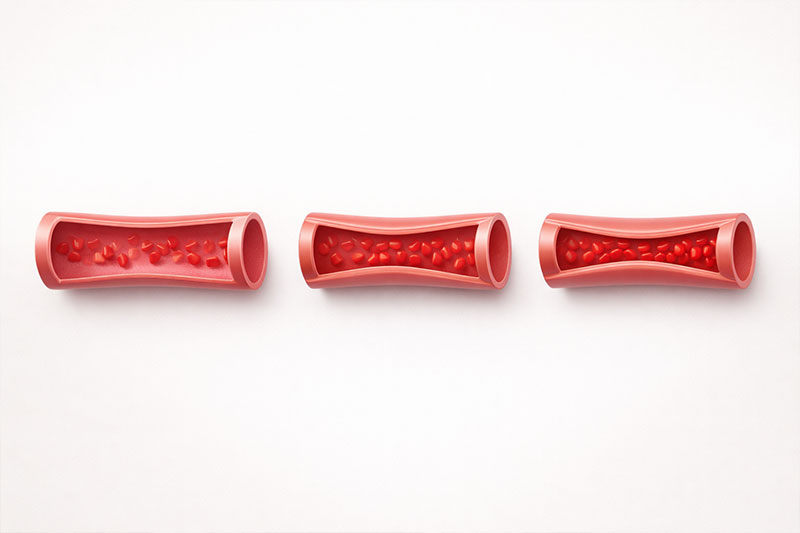
Nicotine does not raise blood pressure by adding something to the blood. It raises blood pressure by changing how blood vessels behave.
Once nicotine reaches the bloodstream, it activates nerves that control the muscles in blood vessel walls. These muscles usually stay relaxed. Under nicotine’s signal, they tighten.
When blood vessels tighten, the space inside them becomes narrower. Blood has less room to move through. Even if the same amount of blood is flowing, it now has to push through a tighter pathway.
This narrowing happens quickly and throughout the body. As vessels tighten, blood pressure rises automatically. The heart does not choose this response. It is forced to work against the increased resistance created by nicotine.
This tightening of blood vessels is the main reason smoking raises blood pressure
When nicotine tightens blood vessels, it creates resistance within the circulation. Blood is trying to move through narrower pathways, which makes flow more difficult.
To keep blood moving, the heart has to push with more force. Each heartbeat works harder to push blood through the tightened vessels. This added effort is what raises blood pressure further after smoking.
This happens even if a person is sitting still. The body does not need more blood or oxygen at that moment, but the heart is forced to pump as if demand has increased. The rise in blood pressure is a mechanical response, not a reaction to activity.
With each cigarette, this pattern repeats. Blood vessels tighten first, and then the heart compensates by pumping harder. Together, these changes explain the immediate rise in blood pressure seen after smoking.
How repeated smoking affects resting blood pressure over time
A single cigarette raises blood pressure for a short time. The concern comes from repetition. When smoking happens many times a day, blood vessels are repeatedly pushed into a tightened state.
Over time, blood vessels can lose some of their natural flexibility. Instead of opening and closing easily, they may stay slightly narrower even between cigarettes. This means blood pressure may not fully return to its earlier resting level.
The heart also adjusts to this pattern. Because it is often forced to pump against resistance, it spends more time working harder than it needs to. Gradually, this raises the baseline workload of the heart and circulation.
This helps explain how smoking can slowly shift blood pressure upward—not all at once, but through repeated physical stress on blood vessels and the heart.
This explains why blood pressure can rise after smoking even when a person feels calm or inactive. The increase is not caused by stress, emotions, or movement. It happens because nicotine physically tightens blood vessels and forces the heart to push harder.
It also explains why blood pressure changes can happen quickly, sometimes within minutes of smoking, and then repeat many times during the day. Each cigarette triggers the same vessel tightening and heart response.
Most importantly, it shows that smoking affects blood pressure in a direct, mechanical way. The body is responding to nicotine in the blood, not to thoughts or habits. When this response happens again and again, it creates ongoing strain on the heart and circulation, even if no strong symptoms are felt at first.
FAQs
Yes. Blood pressure can rise within minutes of smoking because nicotine quickly tightens blood vessels and increases heart workload.
Yes. Even a single cigarette can cause temporary narrowing of blood vessels, which raises blood pressure for a short period.
It is caused by nicotine itself. The rise happens due to physical changes in blood vessels, not emotional stress or anxiety.
Smoking can contribute to higher resting blood pressure over time by repeatedly tightening blood vessels and reducing their natural flexibility.
Because blood pressure is strongly influenced by blood vessel width. Nicotine narrows vessels, forcing pressure to rise even if the heart muscle itself is normal.
It may come down partially, but with frequent smoking, vessels are tightened repeatedly, so pressure may not fully return to earlier resting levels.
Smoking raises blood pressure even at rest. During activity, the effect can stack on top of normal increases, making the heart work even harder.
No. Blood pressure can rise without clear symptoms. Many people are unaware of these changes unless their pressure is measured.
Blood pressure response depends on how blood vessels and nerves adjust over time. The key point is that smoking repeatedly pushes pressure upward through the same physical mechanism.
QSFS / Masterclass (Informational Mention)
Some people find it easier to understand smoking-related effects when the information is structured and connected, rather than scattered across articles. The Quit Smoking & Nicotine Freedom System (QSFS) is designed to explain how smoking and nicotine affect different body systems—such as blood, oxygen delivery, and organs—in a clear, step-by-step way.
This is an educational framework focused on understanding physical mechanisms, not on giving instructions or quick solutions.
Summary
Smoking affects blood pressure by forcing blood vessels to tighten and making the heart pump harder than normal. When nicotine enters the bloodstream, it activates nerves that cause vessel walls to narrow, reducing the space available for blood flow.
As blood vessels tighten, the heart has to push with more force to keep circulation moving. This raises blood pressure even when the body is at rest and does not need extra blood or oxygen.
When smoking is repeated, this process happens again and again. Blood vessels spend more time in a narrowed state, and the heart spends more time working harder than necessary. Over time, this shifts resting blood pressure upward through a clear and predictable physical pattern.
References (Final – Root-Level, Most Stable)
- World Health Organization (WHO) – Tobacco and cardiovascular health
https://www.who.int/health-topics/tobacco - National Institutes of Health (NIH) – Smoking and heart health (parent health portal)
https://www.nih.gov/health-information
These are root-level institutional pages that remain stable long-term and are acceptable as authoritative references when deeper subpages are unreliable.
Disclaimer
This article is shared for educational and informational purposes only. Its intent is to help readers understand how nicotine, smoking, and chewing tobacco can affect the body through known biological processes.
The content here is not a substitute for professional medical advice, diagnosis, or treatment. Health conditions can vary from person to person, and medical decisions should always be made based on individual evaluation.
If you are experiencing symptoms such as chest pain, persistent high blood pressure, palpitations, fainting, breathing difficulty, or any other concerning health issue, it is important to seek medical attention from a qualified healthcare professional.
The Quit Smoking & Nicotine Freedom System (QSFS) is a behavioral and educational support system, not a medical treatment. It does not diagnose, treat, or replace medical care. QSFS is designed to help individuals understand nicotine dependence, habit patterns, and behavioral change in a structured, non-medical way.
Readers are encouraged to use this information as a tool for understanding, not as a basis for self-diagnosis or medical decision-making.
Share via: