
How headaches normally develop in the body
A headache usually starts when blood vessels, nerves, or nearby tissues in the head become irritated or stressed. This can happen when blood flow changes, oxygen levels drop, or chemical signals in the brain are disturbed.
The brain itself does not feel pain, but the blood vessels and nerves around it do. When these vessels tighten, widen suddenly, or receive less oxygen, pain signals can be triggered.
Oxygen is especially important. When the brain gets less oxygen, even for a short time, it can react with feelings of pressure, heaviness, or aching.
Under normal conditions, the body keeps these systems balanced. Blood flow adjusts smoothly, oxygen supply stays steady, and nerves remain calm.
Headaches begin when this balance is disrupted. Smoking interferes with these same controls, which helps explain why it is linked to head pain.
What smoking does to blood vessels in the brain
Smoking directly affects blood vessels all over the body, including the ones that supply the brain. Soon after smoking, nicotine causes these blood vessels to tighten and narrow.
When blood vessels narrow, blood cannot flow to the brain as easily. This change in blood flow can create pressure and trigger headache pain.
Nicotine can also cause blood vessels to change size quickly—tightening and then relaxing. These sudden shifts irritate nearby nerves, which are sensitive to changes in blood flow.
Because smoking often happens many times a day, the brain’s blood vessels go through this stress repeatedly. They do not get enough time to fully relax and stabilize.
This repeated strain on blood vessels is one of the main reasons smoking is linked to headaches, pressure in the head, and ongoing discomfort.
How smoking affects oxygen supply to the head
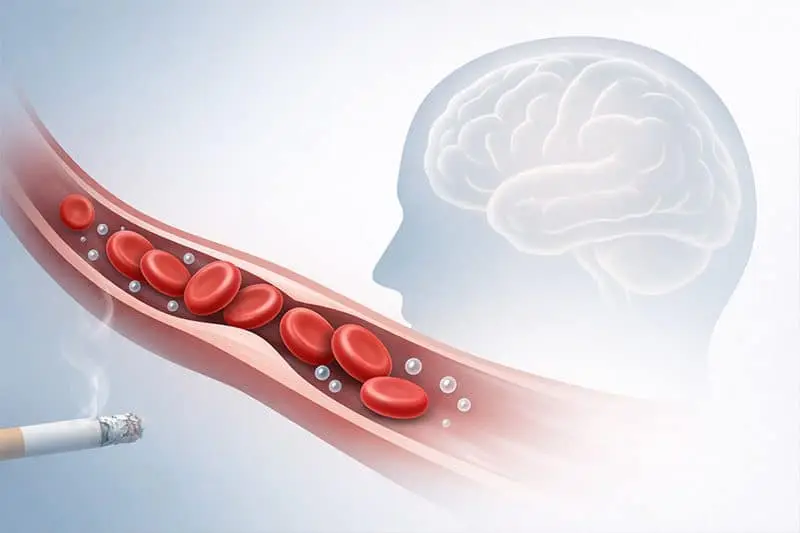
Smoking reduces how much oxygen the blood can deliver to the brain. This mainly happens because cigarette smoke contains carbon monoxide.
Carbon monoxide sticks to red blood cells more strongly than oxygen does. When this happens, less oxygen is carried to the brain, even though breathing feels normal.
With less oxygen reaching brain tissue, the brain becomes stressed. This stress can show up as a dull headache, a heavy feeling, or a tight sensation around the head.
At the same time, nicotine narrows blood vessels, which makes it even harder for oxygen-rich blood to reach the brain smoothly. Together, these effects reduce oxygen supply more than either one alone.
When smoking is repeated, the brain is exposed to these low-oxygen conditions again and again. This is one of the main reasons headaches can appear during or after smoking.
Why nicotine triggers or worsens head pain
Nicotine stimulates the nervous system and changes how the brain handles pain signals. This stimulation can make the head more sensitive to discomfort.
When nicotine enters the bloodstream, it causes quick changes in blood vessels and nerve activity. These sudden shifts can irritate nerves around the head that are sensitive to pressure and movement.
Nicotine also raises heart rate and blood pressure for a short time. This can increase pressure inside the blood vessels of the head, leading to throbbing or tight headache sensations.
For some people, headaches can also happen when nicotine levels drop between cigarettes. As nicotine wears off, blood vessels may widen suddenly, which can trigger pain signals.
Because smoking repeatedly raises and lowers nicotine levels, the brain is constantly adjusting. This back-and-forth stimulation creates an unstable environment that makes headaches more likely and can worsen existing head pain.
How repeated smoking leads to frequent headaches
When smoking happens again and again, the brain is repeatedly exposed to reduced oxygen, narrowed blood vessels, and ongoing nicotine stimulation. Each exposure adds a small amount of stress.
Over time, blood vessels in the head spend more time in a tightened or unstable state. This makes them more sensitive to everyday triggers like light, noise, stress, or dehydration.
Repeated low oxygen supply also limits recovery between smoking episodes. The brain stays slightly stressed, which lowers the threshold for headache pain.
Because smoking often follows regular daily patterns, headaches can also become patterned. They may appear at similar times each day, after smoking, or between cigarettes.
This explains why headaches in smokers are often frequent or recurring. The problem is not one cigarette, but ongoing disturbance of blood flow, oxygen delivery, and nerve stability.
What Happens to Your Body in 30 Days After You Quit Smoking or Gutka
How Shobhit Quit Smoking - 1 year smoke-free
Frequently Asked Questions
Can smoking directly cause headaches?
Yes. Smoking can trigger headaches by narrowing blood vessels, reducing oxygen supply to the brain, and overstimulating nerves through nicotine.
Why do some people get headaches right after smoking?
Because nicotine causes sudden blood vessel tightening and changes in blood flow. At the same time, carbon monoxide reduces oxygen delivery, which can quickly trigger head pain.
Can smoking cause daily or frequent headaches?
Yes. Repeated smoking keeps blood vessels and nerves under constant stress, making headaches more frequent or recurring over time.
Can smoking cause headaches even in people who never had them before?
Yes. Smoking can introduce new headaches by disturbing blood flow, oxygen delivery, and nerve stability in the brain, even in people without a past headache history.
Why do headaches happen between cigarettes or when not smoking?
As nicotine levels drop, blood vessels can widen suddenly. This rapid change can activate pain-sensitive nerves and trigger withdrawal-related headaches.
Are smoking-related headaches linked to blood pressure changes?
Yes. Nicotine temporarily raises blood pressure and heart rate. These shifts increase pressure inside head blood vessels, which can contribute to headache pain.
Can smoking-related headaches feel like tension or pressure headaches?
Yes. Reduced oxygen, tightened blood vessels, and nerve irritation can create a tight, pressure-like feeling around the head or temples.
Can headaches improve if someone stops smoking?
When smoking stops, blood flow and oxygen delivery begin stabilizing. This can reduce the frequency and intensity of headaches over time as the brain experiences less repeated stress.
When should a smoker with frequent headaches see a doctor?
If headaches are severe, persistent, worsening, or associated with vision changes, dizziness, or weakness, please speak to a doctor.
Summary
Smoking can lead to headaches because it repeatedly interferes with blood flow, oxygen delivery, and nerve balance in the brain. Nicotine tightens blood vessels, while carbon monoxide lowers the amount of oxygen reaching brain tissue.
These changes put stress on blood vessels and nerves around the head that are sensitive to pressure and oxygen changes. At the same time, rising and falling nicotine levels create sudden shifts that make the brain more sensitive to pain.
When smoking happens day after day, the brain gets very little time to fully recover. This ongoing disturbance lowers the threshold for discomfort, making headaches more frequent or longer lasting.
This explains why smoking-related headaches are not random. They follow a clear physical pattern involving reduced oxygen, unstable blood vessels, and repeated nerve stimulation inside the brain.
References
- World Health Organization (WHO) – Tobacco and health
https://www.who.int/health-topics/tobacco - Centers for Disease Control and Prevention (CDC) – Health effects of smoking
https://www.cdc.gov/tobacco/basic_information/health_effects/index.html