
Body Changes After Quitting Smoking: What Improves First?

Authored by QSFS Team; Final Review by Aman Doda
Last Updated: 10/01/2026

- What changes begin inside the body soon after smoking stops
- Which body systems respond first when smoke exposure ends
- Why some improvements are felt quickly while others take longer
- How these early changes are physical and automatic
- What “improves first” really means at a body level
When smoking stops, the body doesn’t stay frozen in its last state. From the first day without smoke, internal systems begin to shift as constant chemical exposure is removed.
These early changes are not about willpower or intention. They happen simply because smoke is no longer entering the lungs or bloodstream, allowing normal body functions to settle back into their usual patterns.
Some improvements start sooner than others. Knowing what changes first helps explain why certain benefits show up early, while deeper recovery takes more time. The process begins with basic functions like oxygen delivery and circulation.
What happens in the body when smoking stops
When smoking stops, the body is no longer exposed to nicotine, carbon monoxide, and thousands of other smoke chemicals entering every few hours. This creates an immediate change inside the blood, lungs, and blood vessels.
One of the first things to happen is a drop in carbon monoxide levels in the blood. This frees hemoglobin, the oxygen-carrying part of red blood cells, so it can bind oxygen properly again. As a result, oxygen delivery starts becoming more efficient without any conscious effort.
At the same time, nicotine-driven nerve signals begin to quiet. Blood vessels are no longer repeatedly forced into a tightened state, and the heart is no longer pushed to work harder than it needs to. These shifts set the stage for the earliest improvements the body experiences after quitting.
This helps explain why some changes begin quickly. The body is not “repairing” itself yet. It is first removing interference and allowing normal function to return.
How oxygen levels respond first after quitting smoking
One of the earliest improvements after quitting smoking is in oxygen delivery. This happens because the blood is no longer exposed to carbon monoxide from cigarette smoke.
While smoking, carbon monoxide binds tightly to hemoglobin and blocks oxygen from attaching properly. When smoking stops, carbon monoxide levels in the blood begin to fall. As this gas clears, hemoglobin becomes available again to carry oxygen.
This change does not require healing or repair. It happens because the blocker is removed. With each hour without smoke, more hemoglobin is free to bind oxygen, and oxygen delivery to tissues becomes more efficient.
This is why oxygen-related improvements often appear first. Cells start receiving oxygen more easily, even though the lungs may still need time to clear irritation. The blood’s oxygen-carrying ability improves simply because it is no longer being interfered with.
Why circulation begins to improve early
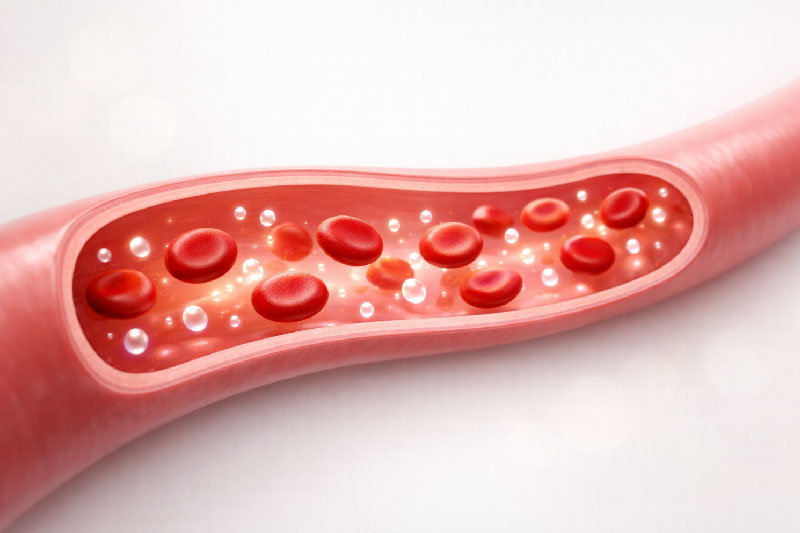
Another early improvement after quitting smoking happens in circulation. This change is closely tied to the drop in nicotine exposure.
While smoking, nicotine repeatedly sends signals that tighten blood vessels. This narrowing limits blood flow and forces the heart to push harder. When smoking stops, these signals begin to fade.
As nicotine levels fall, blood vessels are no longer constantly told to stay tight. They start relaxing back toward their normal width. This allows blood to move more easily through the body with less resistance.
This change begins early because, again, it is not repair but release. The body is no longer being pushed into a narrowed, high-pressure state. As circulation improves, tissues receive blood more easily, supporting the oxygen improvements happening at the same time.
While smoking, the heart is repeatedly pushed to work harder than normal. This happens because nicotine tightens blood vessels and forces the heart to pump against higher resistance many times a day.
After quitting, this constant pressure begins to ease. As blood vessels relax and circulation improves, the heart no longer has to push as hard just to move blood through the body. The workload starts to move back toward its natural resting level.
This does not mean the heart suddenly becomes “stronger.” It means the heart is no longer being overworked by chemical signals. With less resistance in the blood vessels, each heartbeat can do its job more efficiently.
This reduction in heart workload often follows improvements in oxygen delivery and circulation. Together, these early changes help explain why some people notice less strain or heaviness in the body relatively early after stopping smoking.
Why some changes are felt quickly while others take longer
After quitting smoking, the body improves in stages. The first changes are the ones that remove interference, not the ones that require rebuilding.
Oxygen delivery, circulation, and heart workload improve early because smoke chemicals are no longer actively blocking or forcing these systems. Once carbon monoxide and nicotine levels fall, the body can move back toward normal function on its own.
Other changes, such as lung tissue repair, nerve sensitivity adjustments, or deeper blood vessel healing, take more time because they involve physical recovery. Cells need time to replace damaged structures and reset long-standing patterns.
This difference explains why early improvements are often subtle but noticeable, while deeper changes feel slower. The body first regains normal function, then gradually works on repair and restoration. Both matter, but they happen on different timelines for clear physical reasons.
These early improvements help explain why many people notice changes soon after quitting smoking, even before any long-term healing has taken place. Feeling slightly less breathless, having steadier circulation, or sensing less internal strain are not imagined effects.
They happen because oxygen can bind to hemoglobin properly again, blood vessels are no longer being forced to stay tight, and the heart is no longer pushed to work against constant resistance. The body is simply allowed to operate closer to its normal state.
This also explains why these improvements are often uneven. Oxygen delivery and circulation respond quickly, while other areas may still feel slow or uncomfortable. The body first removes chemical pressure, then gradually works on deeper repair. Understanding this helps make the early phase after quitting easier to interpret in physical terms.
This video adds a real-life perspective to the blood-level explanation above. It helps connect everyday experiences—such as fatigue or reduced energy—with what is happening silently inside the blood when hemoglobin cannot carry enough oxygen.
FAQs
The earliest improvements usually happen in oxygen delivery, circulation, and heart workload. These change first because smoke chemicals are no longer interfering with normal function.
Because oxygen improvement starts in the blood. Once carbon monoxide clears, hemoglobin can carry oxygen properly again, even if the lungs still need time to recover.
Yes. Some systems respond quickly when chemical pressure is removed, while others take longer because they require physical repair.
No. Early improvements happen because interference from smoke chemicals is removed. Deeper healing, such as tissue repair, takes longer.
Blood flow improves early when vessels relax, but muscles and organs may still need time to adapt after long-term reduced oxygen and blood supply.
Yes. Oxygen delivery and circulation improve because the chemicals causing interference are no longer present, regardless of how long someone smoked.
Because once smoking stops, harmful chemicals stop entering the body. Normal body systems resume their function automatically when interference is removed.
Yes. Physical improvements like better oxygen delivery and circulation can occur even while the nervous system is still adjusting to the absence of nicotine.
Early improvements show that normal function is returning, but long-term recovery depends on gradual healing over time. The early phase reflects removal of chemical stress, not full repair.
QSFS / Masterclass
Some people find it easier to understand post-smoking changes when the body is explained as a connected system rather than isolated symptoms. The Quit Smoking & Nicotine Freedom System (QSFS) is designed to explain what happens inside the body—step by step—after smoking stops, including oxygen delivery, circulation, and heart workload.
This is an educational framework focused on understanding physical mechanisms, not on giving instructions, promises, or timelines.
Summary
After quitting smoking, the first changes in the body happen because harmful interference is removed, not because the body is actively repairing itself. Carbon monoxide levels fall, allowing hemoglobin to carry oxygen properly again. This is why oxygen delivery improves early.
At the same time, nicotine-driven signals that tighten blood vessels begin to fade. Blood vessels start to relax, circulation improves, and the heart no longer has to work as hard just to move blood through the body.
These early improvements explain why some changes are noticed sooner than others. The body first moves back toward normal function in basic systems like oxygen delivery, circulation, and heart workload. Deeper healing and repair then continue more gradually over time, building on this initial phase.
References
- World Health Organization (WHO) – Tobacco and health
https://www.who.int/health-topics/tobacco - National Institutes of Health (NIH) – Health effects of smokinga
https://www.nih.gov/health-information
Disclaimer
This article is shared for educational and informational purposes only. Its intent is to help readers understand how nicotine, smoking, and chewing tobacco can affect the body through known biological processes.
The content here is not a substitute for professional medical advice, diagnosis, or treatment. Health conditions can vary from person to person, and medical decisions should always be made based on individual evaluation.
If you are experiencing symptoms such as chest pain, persistent high blood pressure, palpitations, fainting, breathing difficulty, or any other concerning health issue, it is important to seek medical attention from a qualified healthcare professional.
The Quit Smoking & Nicotine Freedom System (QSFS) is a behavioral and educational support system, not a medical treatment. It does not diagnose, treat, or replace medical care. QSFS is designed to help individuals understand nicotine dependence, habit patterns, and behavioral change in a structured, non-medical way.
Readers are encouraged to use this information as a tool for understanding, not as a basis for self-diagnosis or medical decision-making.
Share via: