
Quit Smoking Effects on Skin: When Will Your Face Start Improving?

Authored by QSFS Team: Final Review by Aman Doda
Last Updated: 02/02/2026

- How smoking affects skin blood flow, oxygen, and nutrients
- What changes begin inside the skin after quitting smoking
- Why skin improvement happens gradually, not instantly
- How collagen and skin repair respond after smoking stops
- What explains common changes people notice in their face after quitting
- 01: How smoking affects blood flow and oxygen delivery to the skin
- 02: What changes inside the skin when smoking stops
- 03: How collagen repair begins after quitting
- 04: Why facial changes appear slowly over time
- 05: What these changes explain about skin tone, texture, and glow after quitting
- 06: Why Smokers Look Older Faster | Shocking Science Behind Aging & Nicotine
- 07: FAQs
- 08: Disclaimer
Many people notice changes in their skin while smoking—dullness, uneven tone, early lines, or a constantly tired look caused by smoking-related skin aging. After quitting smoking, a common question is how soon the skin will start to look better.
Skin does not change instantly after quitting. Unlike breathing or cravings, skin recovery depends on blood flow, oxygen delivery, and slow rebuilding processes that happen deep inside the skin.
Because of this, some people expect fast visible results and feel disappointed when early changes are subtle. This can create confusion about whether quitting is helping the skin at all.
To understand when and why the face begins to improve, it helps to look at what smoking does to the skin—and what changes inside the body once smoking stops.
How Smoking Affects Blood Flow and Oxygen Delivery to the Skin
Healthy skin depends on steady blood flow. Blood brings oxygen and nutrients that keep skin cells active, healthy, and able to repair themselves.
When a person smokes, nicotine causes blood vessels to tighten. These narrowed vessels send less blood to the skin, especially to the face.
At the same time, carbon monoxide from cigarette smoke reduces how much oxygen the blood can carry. So even the blood that reaches the skin delivers less oxygen than it should.
With less blood and less oxygen, skin cells work in a low-energy state. Repair slows down, waste removal becomes less efficient, and the skin gradually loses brightness and resilience.
This reduced circulation is one of the main reasons smoking makes the face look dull, uneven, and tired. It also explains why skin recovery after quitting depends strongly on restoring normal blood flow.
What Changes Inside the Skin When Smoking Stops
When smoking stops, nicotine no longer forces blood vessels to stay tight. Slowly, these vessels begin to relax and open back toward their normal size.
As circulation improves, more oxygen and nutrients start reaching skin cells. This does not happen suddenly, but it begins quietly within the deeper skin layers.
With better oxygen supply, skin cells can produce energy more efficiently. This supports basic repair processes such as cell renewal and maintaining the skin barrier.
Improved blood flow also helps remove waste products more effectively. This reduces the dull, tired appearance caused by restricted circulation.
These internal improvements usually begin before anything noticeable appears on the face. The skin starts repairing itself at a cellular level first, even if the mirror does not yet show clear changes.
How Collagen Repair Begins After Quitting
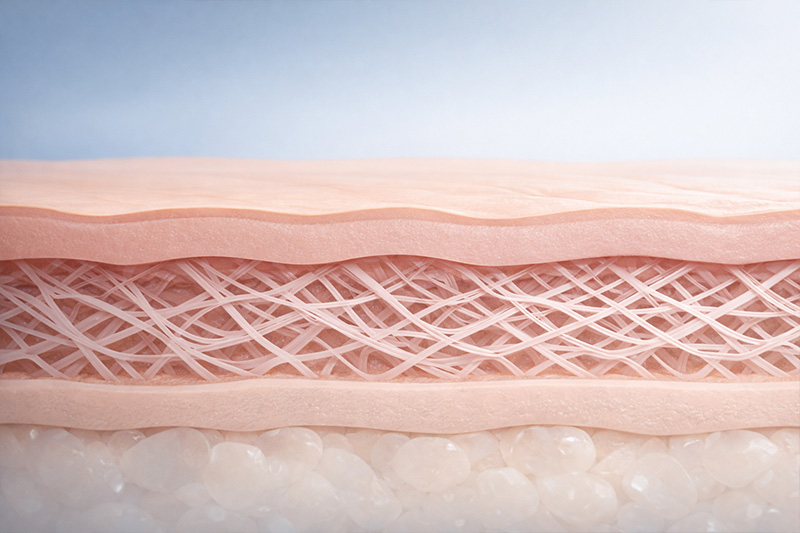
Collagen is the protein that gives skin its firmness and structure. It helps skin stay smooth, elastic, and supported.
Smoking damages collagen in two main ways. Reduced blood flow limits the nutrients needed to maintain collagen, and smoke chemicals increase the breakdown of existing collagen fibers.
After quitting, this damage process slows down. With improved circulation and oxygen delivery, skin cells regain the ability to protect and rebuild collagen more effectively.
New collagen production is slow. The body does not replace damaged collagen quickly, but it gradually improves the balance between breakdown and repair.
This is why early changes after quitting are often subtle. The skin is strengthening its internal support first, long before visible firmness or smoother texture becomes obvious.
Skin does not renew overnight. Even after quitting smoking, the face does not change instantly because skin follows a slow biological renewal cycle.
Skin cells take time to divide, mature, rise to the surface, and shed. Better blood flow supports this process, but it cannot speed it up immediately.
Collagen repair also happens gradually. The body first stops further damage, then slowly rebuilds internal support before visible firmness improves.
Because of this, early improvements may be felt before they are seen. Skin may feel less tight or slightly better hydrated before it looks different.
This slow pace does not mean quitting is ineffective. It means the skin is repairing itself in layers—starting deep inside and slowly moving outward.
What These Changes Explain About Skin Tone, Texture, and Glow After Quitting
As circulation improves, skin tone often becomes more even. Areas that looked dull or slightly grey begin receiving better oxygen and nourishment.
Improved oxygen helps skin cells function more efficiently, which supports a healthier surface layer. Over time, this can reduce roughness and uneven texture.
As collagen breakdown slows and repair gradually improves, the skin gains better internal support. This leads to firmness developing slowly rather than suddenly.
The “glow” many people notice is not cosmetic. It comes from better blood flow, improved hydration balance, and more efficient waste removal at the skin surface.
These changes usually appear in stages—first the skin feels better, then it looks brighter, and later shows gradual improvement in texture and firmness as deeper repair continues.
This explanation helps clarify why skin changes after quitting smoking are gradual rather than immediate. Skin health depends on steady blood flow, good oxygen supply, and slow repair processes that cannot reset overnight.
When smoking stops, the factors that restrict circulation and damage collagen are removed. However, the body still needs time to restore balance inside the deeper layers of the skin.
Early repair happens beneath the surface, long before it becomes clearly visible on the face. This is why people often feel changes before they see them. The skin may feel less tight or less dry first, while brightness, tone, and texture improve later.
Most importantly, this shows that slow visible change does not mean quitting is not working. It means the skin is repairing itself naturally, step by step, in the way the body is designed to heal.
FAQs
Internal skin repair begins soon after quitting as blood flow and oxygen delivery improve. Visible changes usually appear later because skin renewal and collagen repair take time.
Improved circulation and hydration support skin function first at a deeper level. Sensations like less tightness or dryness often come before visible brightness or texture changes.
Quitting slows further collagen damage and supports gradual repair, but existing deep wrinkles do not disappear suddenly. Improvement is usually subtle and progressive.
Quitting does not change natural skin color, but improved blood flow and oxygen delivery can reduce dullness and uneven tone.
As circulation improves, dullness can reduce gradually. Timing varies because skin renewal differs from person to person.
Improved circulation and reduced internal stress can support healthier skin balance, though acne depends on multiple factors.
Improved blood flow can help reduce dull, tired appearance over time.
Quitting stops further damage and allows repair. While skin may not return to a pre-smoking state, many aspects can improve steadily.
If there are persistent skin issues, unusual discoloration, or non-healing sores, please speak to a doctor.
QSFS / Masterclass
Some people want clarity about skin changes after quitting smoking and why improvement is gradual rather than instant.
The Quit Smoking & Nicotine Freedom System (QSFS) explains how smoking affects blood flow, oxygen delivery, collagen health, and long-term skin repair at a body level. It focuses on understanding internal mechanisms rather than surface-level promises.
This is an educational framework only. It does not provide medical treatment, skincare routines, or guaranteed outcomes.
Summary
Smoking affects the skin mainly by reducing blood flow, limiting oxygen delivery, and weakening collagen support. These changes build slowly, which is why the face of a smoker often appears dull, tired, or uneven over time.
After quitting, the body begins to repair this damage from the inside. Blood circulation improves, more oxygen reaches the skin, and skin cells slowly regain their ability to renew and repair themselves.
Because skin follows a slow natural renewal cycle, improvement does not happen overnight. Early changes are often felt before they are seen, followed gradually by brighter tone, smoother texture, and a healthier overall appearance.
This explains why patience is important. Skin improvement after quitting smoking is not sudden—it is the result of steady, ongoing restoration of normal skin function.
References
- World Health Organization (WHO) – Tobacco and health effects
https://www.who.int/health-topics/tobacco - Centers for Disease Control and Prevention (CDC) – Health effects of smoking
https://www.cdc.gov/tobacco/basic_information/health_effects/index.htm
Disclaimer
This article is shared for educational and informational purposes only. Its intent is to help readers understand how nicotine, smoking, and chewing tobacco can affect the body through known biological processes.
The content here is not a substitute for professional medical advice, diagnosis, or treatment. Health conditions can vary from person to person, and medical decisions should always be made based on individual evaluation.
If you are experiencing symptoms such as chest pain, persistent high blood pressure, palpitations, fainting, breathing difficulty, or any other concerning health issue, it is important to seek medical attention from a qualified healthcare professional.
Share via: