
How Smoking Affects Hemoglobin and Oxygen in Your Body

Authored by QSFS Team ; Final Review by Aman Doda
Last Updated: 05/01/2026

- What hemoglobin does inside red blood cells
- How smoking introduces gases that interfere with oxygen binding
- Why oxygen delivery drops even when breathing feels normal
- How carbon monoxide competes with oxygen in the blood
- Why this effect is physical and predictable, not dependent on effort or fitnes
- 01: What hemoglobin does in red blood cells
- 02: What enters the blood when cigarette smoke is inhaled
- 03: How carbon monoxide binds to hemoglobin
- 04: Why oxygen gets displaced even when lungs are working
- 05: How reduced oxygen delivery affects the body over time
- 06: How Smoking Reduces Oxygen in the Blood
- 07: Long-Form Podcast Video
- 08: FAQs
- 09: Disclaimer
Hemoglobin is a small but essential part of your blood. Its main job is to carry oxygen from your lungs to the rest of your body. This happens quietly in the background, without you needing to notice or control it.
When you smoke, this oxygen-carrying process is disrupted. Even though you are still breathing air into your lungs, your blood does not carry oxygen as efficiently as it should. This change can begin almost immediately after smoke is inhaled.
To understand why this happens, it helps to look at what cigarette smoke brings into the blood and how it interferes with hemoglobin’s normal role of moving oxygen through the body.
What hemoglobin does inside red blood cells
Hemoglobin is a protein found inside red blood cells. Its role is very specific: to pick up oxygen in the lungs and carry it to the rest of the body. Each red blood cell holds millions of hemoglobin molecules, which makes oxygen transport efficient when everything is working normally.
When you breathe in, oxygen enters the lungs and moves into the blood. Hemoglobin binds to this oxygen and carries it as the blood travels through the body. When the blood reaches tissues like the brain, muscles, or heart, hemoglobin releases the oxygen so cells can use it for energy.
This system depends on hemoglobin being free and available to carry oxygen. If something else attaches to hemoglobin instead, oxygen transport becomes less effective right away. This is the point where smoking begins to interfere with normal oxygen delivery.
What enters the blood when cigarette smoke is inhaled
When cigarette smoke is inhaled, it is not only nicotine that enters the body. Smoke contains many gases, and one of the most important for oxygen transport is carbon monoxide.
Carbon monoxide moves easily from the lungs into the bloodstream. It does this in the same way oxygen does, since both are gases. Once in the blood, carbon monoxide comes into direct contact with hemoglobin inside red blood cells.
The issue is that carbon monoxide binds to hemoglobin much more tightly than oxygen does. When carbon monoxide attaches to hemoglobin, it takes up the same space where oxygen would normally bind.
Because of this, even though oxygen is present in the lungs and blood, some hemoglobin is no longer available to carry it. The blood may appear normal, but its ability to carry oxygen is already reduced.
How carbon monoxide binds to hemoglobin
Hemoglobin is meant to bind with oxygen, but it does not clearly tell the difference between oxygen and carbon monoxide. When both are present in the blood, hemoglobin strongly favors carbon monoxide.
Carbon monoxide attaches to hemoglobin about 200 times more tightly than oxygen. Once it binds, it stays attached longer and blocks that hemoglobin from carrying oxygen. This happens quietly, without any immediate feeling or warning.
As more hemoglobin becomes occupied by carbon monoxide, less is left available to carry oxygen. Even small amounts of carbon monoxide can lower oxygen delivery because it binds so efficiently.
This is why smoking can reduce oxygen supply even when breathing feels normal. Oxygen may still be entering the lungs, but hemoglobin is partly locked by carbon monoxide and cannot fully do its job.
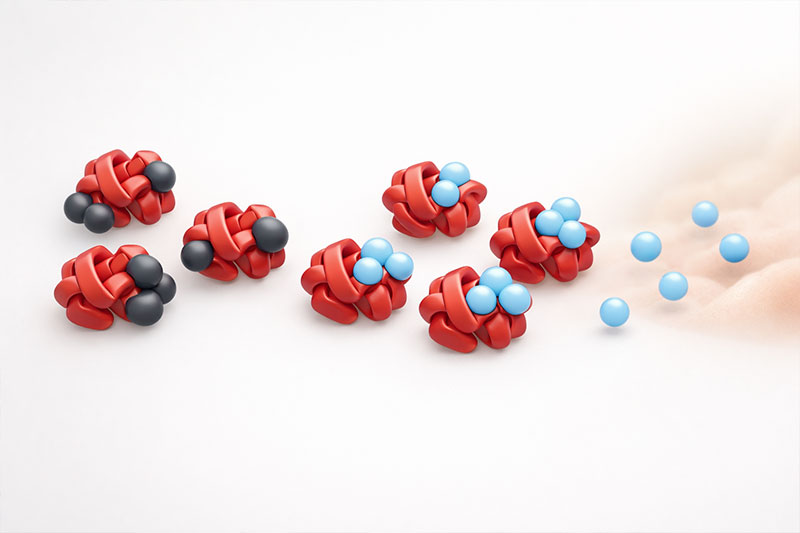
After carbon monoxide binds to hemoglobin, the issue goes beyond just taking up space. It also changes how the remaining hemoglobin behaves. Hemoglobin that is still carrying oxygen tends to hold onto it more tightly and releases it less easily to body tissues.
This leads to two things happening at the same time. First, fewer hemoglobin molecules are available to carry oxygen. Second, the oxygen that is carried is delivered less efficiently to the cells that need it.
Because the lungs may still be filling with air normally, breathing does not always feel difficult. Oxygen is present, but it is not reaching tissues in the amounts the body expects. This is why reduced oxygen delivery can happen quietly, without clear warning signs at first.
How reduced oxygen delivery affects the body over time
Oxygen is needed by every cell to make energy. When hemoglobin carries less oxygen, tissues begin working with a smaller supply than they are meant to have. This usually does not cause an immediate problem, but it slowly changes how the body functions.
Organs with higher oxygen needs, such as the brain, heart, and muscles, are affected first. Cells may tire more easily because they cannot make energy as efficiently. This is why reduced oxygen delivery is often linked to lower stamina, quicker fatigue, or a heavy feeling in the body.
With repeated smoking, carbon monoxide exposure happens again and again. Hemoglobin is repeatedly occupied, released, and then occupied again. This creates frequent periods when oxygen delivery is below normal, even if breathing feels fine. Over time, the body adjusts to working with less oxygen, which puts ongoing strain on organ systems.
This helps explain how smoking affects oxygen at a deep blood level—not by stopping breathing, but by quietly limiting how much oxygen actually reaches body tissues.
This explains why smokers can have lower oxygen levels even when their lungs are still taking in air normally. The issue is not always breathing itself, but what happens after oxygen enters the blood.
It also explains common experiences such as getting tired more easily, reduced stamina, lightheadedness, or slower physical recovery. These are signs that tissues are working with less oxygen than they expect, not signs of poor effort or low fitness.
Most importantly, it shows that smoking affects oxygen delivery in a quiet, chemical way. Carbon monoxide changes how hemoglobin behaves and limits oxygen transport without clear warning signs. This is why oxygen-related strain from smoking often builds gradually, rather than feeling sudden or dramati
This video adds a real-life perspective to the blood-level explanation above. It helps connect everyday experiences—such as fatigue or reduced energy—with what is happening silently inside the blood when hemoglobin cannot carry enough oxygen.
FAQs
Yes. Smoking mainly affects how oxygen is carried in the blood, not how air enters the lungs. Breathing can feel normal while oxygen delivery to tissues is reduced.
Yes. Carbon monoxide from cigarette smoke binds strongly to hemoglobin and blocks oxygen from attaching properly.
Yes. Carbon monoxide enters the blood quickly, and hemoglobin binding can change even after short exposure.
Any source that delivers carbon monoxide into the lungs can interfere with hemoglobin. Traditional cigarette smoke is the most common source, but exposure to smoke in enclosed spaces can also affect oxygen binding.
Because oxygen still enters the lungs, the body compensates quietly. The reduction happens at the blood level, so early changes often go unnoticed.
Exercise increases breathing and circulation, but it cannot prevent carbon monoxide from binding to hemoglobin. The interference happens before oxygen delivery reaches tissues.
Yes. With repeated smoking, carbon monoxide exposure happens again and again, creating frequent periods where hemoglobin cannot carry oxygen efficiently.
Not always. Standard oxygen readings may appear normal because they measure oxygen presence, not how well hemoglobin is releasing it to tissues.
This specific oxygen problem is caused mainly by carbon monoxide in smoke, not nicotine. Nicotine affects the body through different mechanisms.
QSFS / Masterclass (Informational Mention)
Some people find it easier to understand smoking-related effects when the information is structured and connected, rather than scattered across articles. The Quit Smoking & Nicotine Freedom System (QSFS) is designed to explain how smoking and nicotine affect different body systems—such as blood, oxygen delivery, and organs—in a clear, step-by-step way.
This is an educational framework focused on understanding physical mechanisms, not on giving instructions or quick solutions.
Summary
Smoking affects oxygen levels by changing how hemoglobin behaves in the blood. When cigarette smoke is inhaled, carbon monoxide enters the bloodstream and binds tightly to hemoglobin, taking up space meant for oxygen.
As more hemoglobin becomes occupied by carbon monoxide, less oxygen can be carried to body tissues. At the same time, the oxygen that is carried is released less easily. This means cells receive less oxygen even when breathing feels normal.
With repeated smoking, this process happens again and again. Oxygen delivery stays below normal more often, forcing the body and organs to function with a reduced supply. This explains how smoking quietly affects oxygen at a blood level, through a direct chemical interference with hemoglobin’s normal role.
References
- World Health Organization (WHO) – Tobacco and health (carbon monoxide and blood oxygen)
https://www.who.int/health-topics/tobacco - National Heart, Lung, and Blood Institute (NHLBI, NIH) – How smoking affects blood and oxygen delivery
https://www.nhlbi.nih.gov/health/heart-disease/smoking
Disclaimer
This article is shared for educational and informational purposes only. Its intent is to help readers understand how nicotine, smoking, and chewing tobacco can affect the body through known biological processes.
The content here is not a substitute for professional medical advice, diagnosis, or treatment. Health conditions can vary from person to person, and medical decisions should always be made based on individual evaluation.
If you are experiencing symptoms such as chest pain, persistent high blood pressure, palpitations, fainting, breathing difficulty, or any other concerning health issue, it is important to seek medical attention from a qualified healthcare professional.
The Quit Smoking & Nicotine Freedom System (QSFS) is a behavioral and educational support system, not a medical treatment. It does not diagnose, treat, or replace medical care. QSFS is designed to help individuals understand nicotine dependence, habit patterns, and behavioral change in a structured, non-medical way.
Readers are encouraged to use this information as a tool for understanding, not as a basis for self-diagnosis or medical decision-making.
Share via: