
You’ve Tried Everything to Quit Smoking — But Missed This One Key Shift
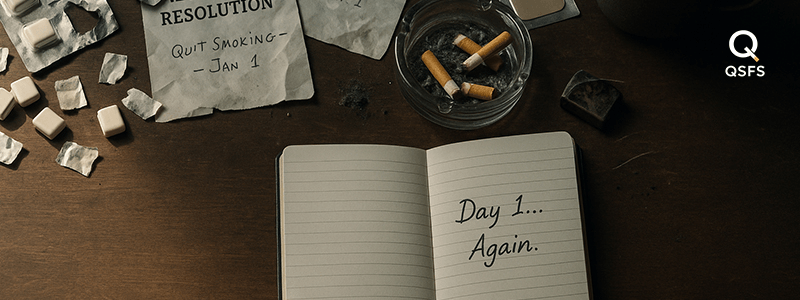
It’s not that you didn’t try. You just didn’t have the right key.
You’ve probably tried to quit smoking or Gutka before — maybe once, maybe ten times. Cold turkey. Nicotine gum. New Year’s resolutions. Swearing on your kids.
And yet… here you are, reading this, still stuck in the loop.
So maybe, deep down, you’ve started wondering:
“Is something wrong with me?”
Let me tell you — no. There’s nothing wrong with you. You were just handed the wrong method. Like trying to open a lock with the wrong key. Doesn’t matter how hard you try — the lock won’t budge unless the key fits.
For years, I’ve coached thousands of people — from 18-year-olds to 65-year-olds, from engineers to auto drivers to senior doctors. And one of the most common mistakes I’ve seen (and you’ve probably made too)… is this:
Trying to quit smoking using only willpower.
Let’s talk about why that doesn’t work — and what actually does.
Willpower Isn’t the Problem — It’s Just Not Enough
You’ve heard it all your life:
- “You just need to be strong.”
- “Have some self-control!”
- “If you really want to quit, you will.”
But quitting smoking is not like skipping dessert or running 100 meters.
See, your brain isn’t just dealing with nicotine. It’s dealing with deeply ingrained patterns. Routines. Cues. Emotional reflexes.
Your first cigarette in the morning? You don’t even think about it. It just happens — like brushing your teeth. That’s your subconscious in action.
Willpower is part of your conscious mind. It makes big decisions, big declarations. But your daily smoking? That’s run by the part of your brain that doesn’t listen to motivation videos.
Think of your brain like a ship. Your conscious mind is the captain. But the real power? The ship’s direction? That’s handled by the board of directors you don’t see — your subconscious. You can want to turn the ship. But if the board says no… you’ll end up sailing in circles.
That’s why you keep going back — even when you swore you wouldn’t.
Quitting Smoking Isn’t About Strength — It’s About Strategy
When people say “Just quit!” — they’re acting like smoking is a simple decision. Like turning off a switch.
But here’s what they miss:
You’re not just quitting a habit. You’re quitting an identity — a pattern that’s been part of your day, your mood, your coping, for 5, 10, 30 years.
It’s not about saying “no” to cigarettes — it’s about becoming the kind of person who doesn’t need to say no.
And that shift doesn’t happen through force. It happens through clarity and a step-by-step method that actually works with your brain, not against it.
It Takes More Than Just One Hero — Think Like a Movie
Here’s a quick story:
Ever watched a big Bollywood or Hollywood blockbuster? Do you think the hero alone makes it a hit?
Not at all.
Behind that one actor are 200+ people: scriptwriters, camera guys, editors, light crew, background score, production designers.
Same with quitting smoking.
Willpower is like the lead actor — useful, yes. But not enough to make the show a success. You need the right support system, the right environment, the right method.
That’s what most people miss. That’s what most programs ignore.

Vikas, 55 — Quit After 35 Years Without Withdrawal
“I had tried many times before. Every time I quit, I’d get headaches, stomach aches, couldn’t go to work. I’d feel miserable. But this time, I didn’t use willpower. I followed the QSFS process — and I had zero withdrawal symptoms. No cravings. In fact, I even lost 8 kgs in the process.”
Vikas smoked 1–2 packs a day for over three decades. He didn’t “try harder” this time. He just used the right approach.
And it worked.
FAQs — Real Answers to Real Doubts
Q: Is willpower helpful at all?
A: It plays a small part — but it can’t fight years of subconscious programming on its own.
Q: Why do I always relapse after a few days?
A: Because your environment, identity, and brain loops haven’t changed — only your intent has.
Q: I don’t want to use nicotine patches or pills. Can I still quit?
A: Absolutely. The QSFS method is 100% behavioural — no substitutes needed.
Q: How do I know this time will be different?
A: Because this time, you’re not relying on willpower. You’ll be changing the root patterns.
Q: I’ve smoked for 25+ years. Is it too late for me?
A: Never. We’ve helped people quit after 40+ years. Your brain is always capable of change.
Q: Will I gain weight if I quit?
A: Not if you follow the right process. In fact, many QSFS students lose weight.
It plays a small part — but it can’t fight years of subconscious programming on its own.
Because your environment, identity, and brain loops haven’t changed — only your intent has.
Absolutely. The QSFS method is 100% behavioural — no substitutes needed.
Because this time, you’re not relying on willpower. You’ll be changing the root patterns.
Never. We’ve helped people quit after 40+ years. Your brain is always capable of change.
Not if you follow the right process. In fact, many QSFS students lose weight.
If You’re Serious — Take This First Step
If you’re still reading, that tells me something: you’re serious.
You don’t want another “quit smoking tip.” You want to understand how to quit smartly.
It’s where most QSFS students finally understand how to quit smartly. It’s not about quitting overnight. It’s about learning how your brain works — and using that to finally break free.
Disclaimer
This article is for educational awareness and personal insight. It is not intended to replace medical treatment or diagnosis. The QSFS system is built on proven behavioural principles by a certified quit-smoking specialist. It supports individuals — including many medical professionals — in quitting successfully. Results may vary.
Share via: